Quick answer
A builders clean checklist works top-down and room-by-room: ceilings, vents and light fittings first, then walls, doors, skirting boards and switches, then joinery inside and out, then windows, glass and tracks, and floors last. Kitchens, bathrooms and the final walkthrough get their own passes. Work in that order and dust never falls onto a surface you’ve already cleaned.
A builders clean is where handover is won or lost, and it’s far too detailed to run off memory. Use the checklist below as your standard — it’s the same order a professional crew works in, and it covers the spots that most often get missed and turn into defect-list items.
Why a checklist matters more than effort
Two crews can put in the same hours and get completely different results, and the difference is almost always sequence. Clean the floors before the ceilings and you’ll do the floors twice. Wipe the walls after the windows and you’ll re-mark the glass.
A checklist locks in that sequence and gives you something to hand the builder at sign-off. It also makes the job auditable: if a client queries a room, you can point at what was done rather than argue from memory. If you’re not sure which clean you’re actually booking, start with our guide to builders clean vs final clean vs bond clean.
Before the cleaners arrive: site prep
Half of a smooth builders clean happens before anyone picks up a cloth. Get these sorted first:
- Confirm all trades are finished and off site — cleaning around active work means cleaning twice
- Remove major debris: timber offcuts, packaging, plasterboard scraps, nails and screws
- Make sure power and water are connected — no vacuums, lights or hot water otherwise
- Flag delicate surfaces: stone benchtops, raw or oiled timber, tinted glass, powder-coated finishes
- Sort access — keys, lift bookings, parking and a waste bin on site
- Leave the air conditioning off until the final clean is done, or it will blow vent dust across every finished surface

The room-by-room builders clean checklist
Work top to bottom in every room, and back to front through the building so you finish at the exit.
Every room: the standard pass
- Ceilings, cornices and ceiling fans dusted
- Air vents and returns vacuumed — a common source of dust that reappears after handover
- Light fittings, downlights and diffusers wiped
- Walls spot-cleaned; adhesive, scuffs and paint flecks removed
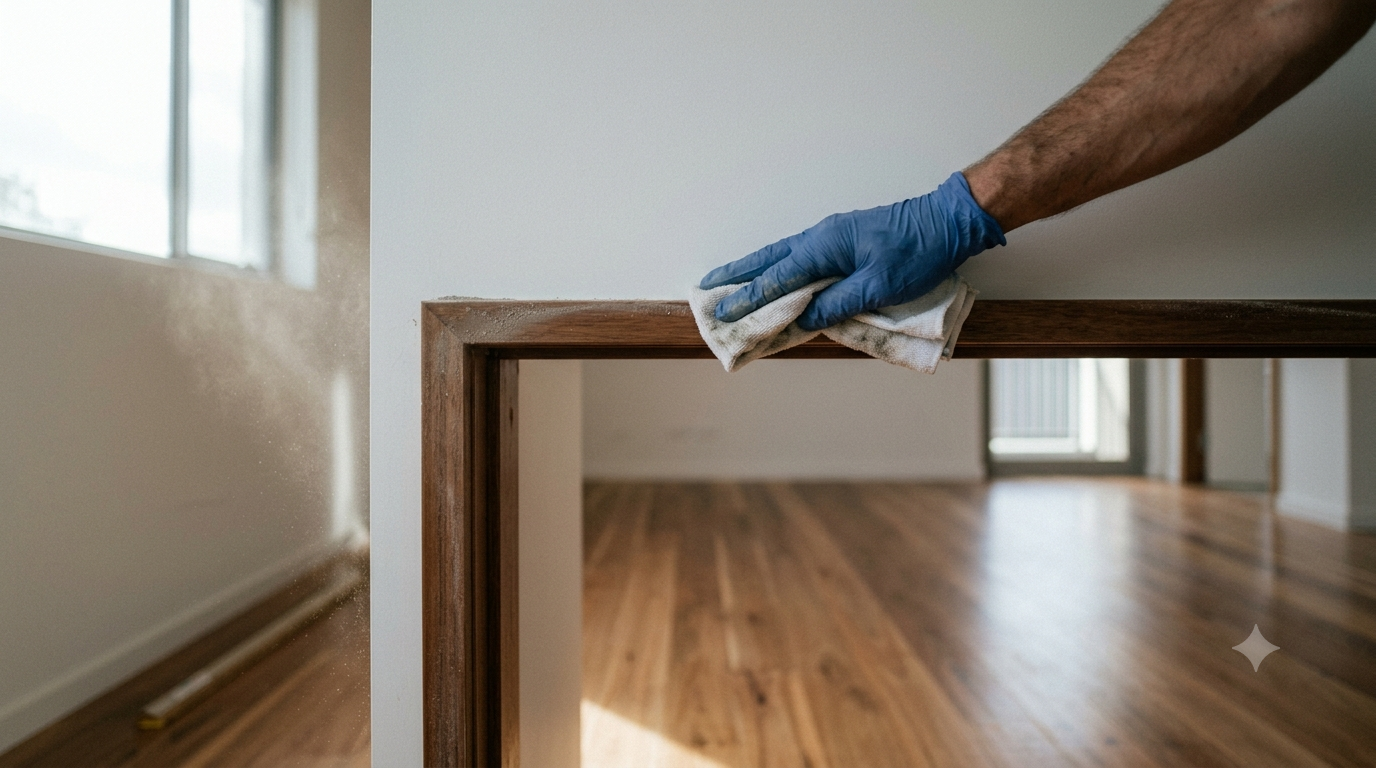
- Skirting boards, architraves and door frames wiped, including top edges
- Doors both sides, plus handles, hinges and door stops
- Light switches, power points and data plates cleaned
- Built-in robes and cupboards: inside, shelves, rails, tracks and tops of doors
- Stickers, barcodes and protective film removed from everything
- Floors HEPA-vacuumed, then mopped with the right product for the surface
Windows and glass
- Glass cleaned both sides, streak-free
- Frames, sills and reveals wiped
- Tracks vacuumed then detailed — this is where builders dust hides
- Paint specks and silicone smears removed carefully (plastic scraper, never metal on tinted glass)
- Flyscreens brushed or washed and refitted
- Mirrors and glass splashbacks polished
Kitchen
- Benchtops and splashback cleaned with a pH-neutral product
- Cupboards and drawers inside and out, including handles and kickboards
- Sink, tap and drain polished; plumbing residue removed
- Oven inside and out, racks, trays and door glass
- Cooktop, rangehood surface and filters
- Dishwasher exterior and door seal; fridge cavity and any water point
- All protective film peeled from appliances and adhesive residue removed
Bathrooms and laundry
- Shower screen and tiles cleaned; grout haze removed
- Silicone smears and sealant residue cleaned off tiles and glass
- Vanity, basin, mirror and cabinet inside and out
- Toilet including cistern, seat, hinges and base
- Tapware, towel rails and fittings polished
- Exhaust fans dusted and vacuumed
- Laundry tub, cupboards, taps and appliance connections
- Floor wastes and drain grates cleared of grout and debris
Outside, balconies and garage
- Paths, driveway and entry swept or pressure-washed on a low setting
- Balcony glass, railings and drainage points
- Garage floor swept and spot-cleaned
- External windows, door frames and entry glass
- All remaining waste removed from site and disposed of per local regulations
The spots that get missed most
If a builder is going to find something at walkthrough, it will almost certainly be one of these:
- Window and door tracks
- Top edges of doors, robes and architraves
- Inside cupboards, drawers and robe shelving
- Air vents and exhaust fans
- Light switch surrounds and power points
- Silicone smears along tiles and shower screens
- Behind and under appliances
- Sticker adhesive on glass, appliances and tapware
Free download
Take this checklist to site. Two printable A4 pages, every room covered, with a sign-off strip for the builder.
Safety on the checklist
A builders clean isn’t a domestic clean, and the gear reflects that. Fine dust from plasterboard, concrete and tile cutting contains respirable crystalline silica, which Safe Work Australia identifies as a serious lung hazard. Build these into every job:
- HEPA-filtered vacuums, not domestic units that blow fines back into the air
- Wet-wiping instead of dry dusting wherever possible
- P2 masks, gloves, eye protection and non-slip footwear
- A sharps sweep for nails, screws, offcuts and glass before floor work starts
- Ventilation while cleaning, and no mixing of chemicals on site
The final walkthrough
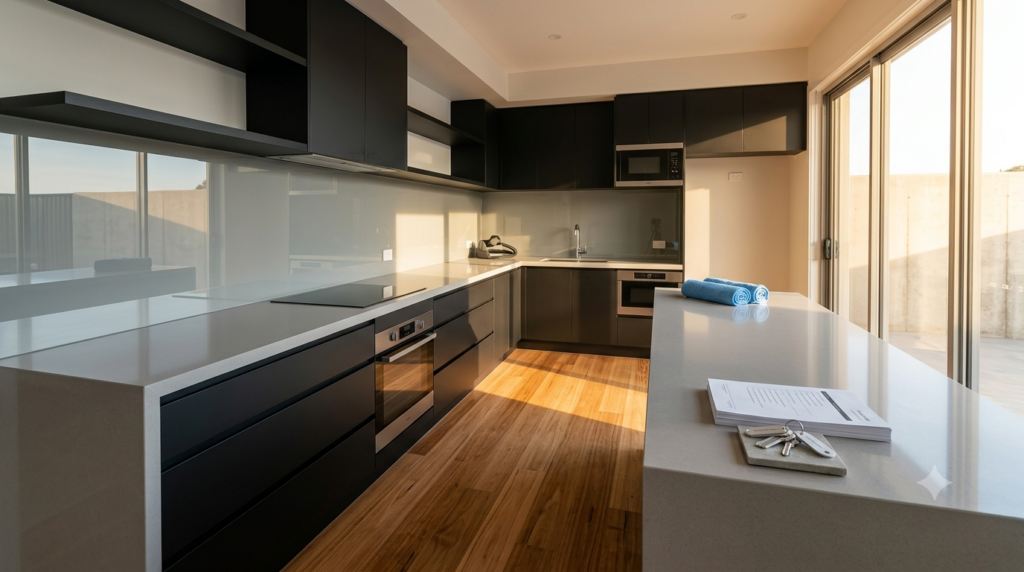
The last 20 minutes decide how the whole job is judged. Walk it properly:
- Inspect in natural light — dust and streaks that vanish under downlights show up at a window
- Check at eye level and then crouch: skirtings, kickboards and door bottoms read differently from low down
- Open every cupboard, drawer and robe
- Run a hand along tracks, sills and top edges
- Photograph each room for your records
- Recheck the following day if you can — settled dust often needs one light final pass
Timing this properly is what stops a rushed result. Our guide on the building handover cleaning schedule covers when to book each stage, and the three toughest messes on a construction site goes deeper on the residues that need special handling.
Frequently Asked Questions
It covers every room top-to-bottom: ceilings, vents and light fittings, walls, doors, skirting boards and switches, joinery inside and out, windows, glass and tracks, then floors last. Kitchens, bathrooms, exterior areas and a final walkthrough each get their own pass.
Always top to bottom and back to front — ceilings and vents first, floors last, finishing at the exit. Cleaning floors early means doing them twice, because dust keeps falling.
Window and door tracks, the top edges of doors and robes, inside cupboards and drawers, air vents and exhaust fans, silicone smears on tiles and glass, and sticker adhesive on appliances and glass.
Yes. Construction dust contains respirable crystalline silica, so a HEPA-filtered vacuum is essential — domestic vacuums blow fine particles back into the air. P2 masks, gloves and eye protection should be standard too.
Once all major trades are off site. Book the final clean for the day or two before handover, and leave the air conditioning off until the final clean is done so vent dust doesn’t recoat every surface.
Want the checklist handled for you?
Spruces runs this checklist as standard on every builders clean and final clean, Australia-wide — from the Gold Coast and Brisbane to Sydney and Melbourne. Get a free, no-obligation quote, or call us on +61 489 937 600.