Quick answer
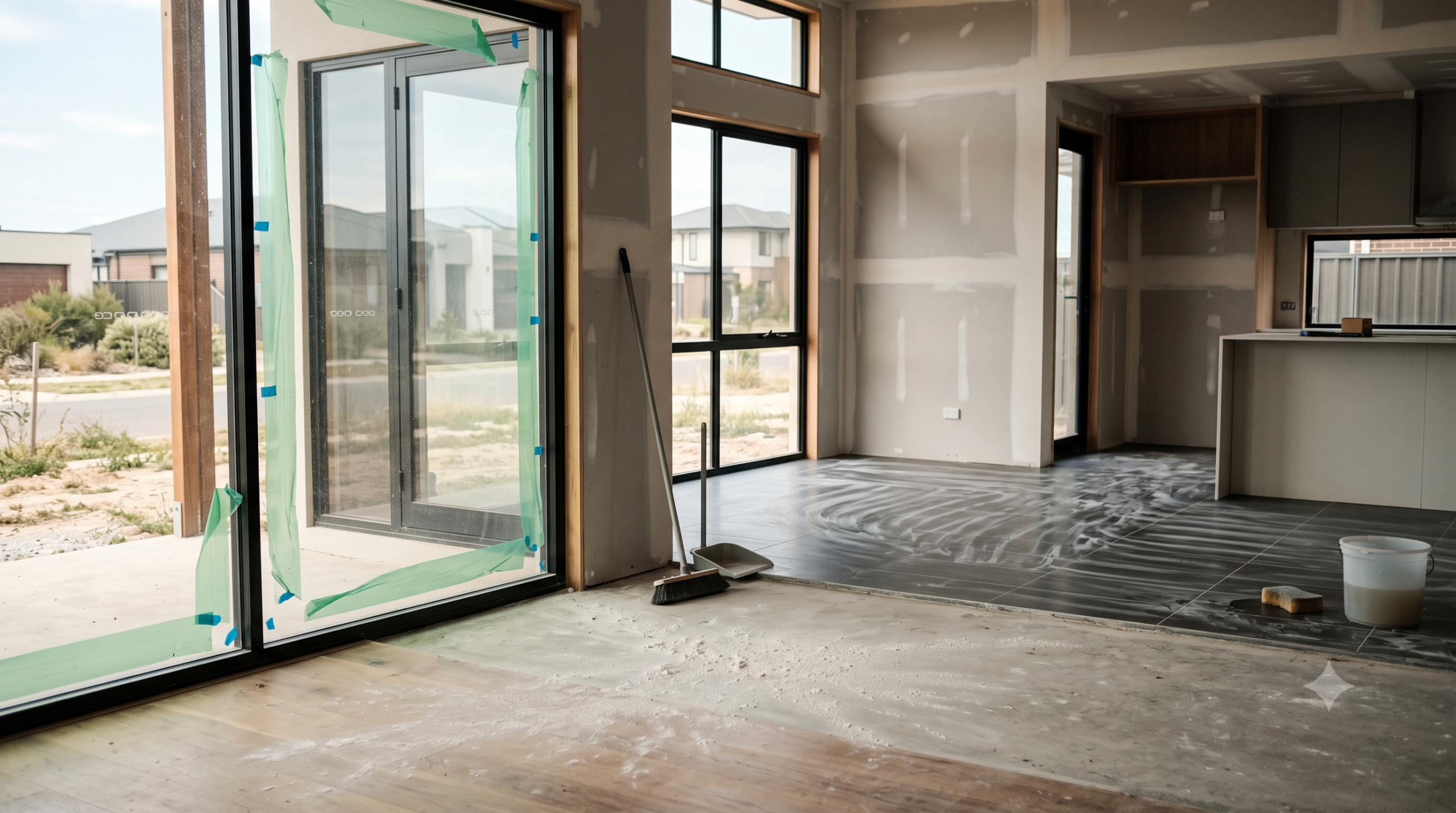
The three hardest things to get off a finished construction site are fine dust (it keeps resettling and needs HEPA capture, not sweeping), adhesive and paint residue (stickers, protective film, grout haze and overspray, which need the right solvent and a plastic scraper), and dried cement and grout (which has to be softened before it’s touched, or it takes the surface with it). Each needs a different method — and getting any of them wrong turns a cleaning job into a replacement order.
When the Build Ends, the Real Cleaning Begins
Walk through a newly built space — shiny floors, fresh paint, that new-build smell — and you’d never guess what it looked like a few days earlier. Post-construction cleaning is a different beast from ordinary cleaning: layers of fine particles bonded to every surface, dried paint that refuses to move, and adhesives that seem fused to the floor.
Here are the three that cause the most trouble, and what actually works on each. If you want the full scope of what a professional job covers, start with what construction cleaning services include.
1. The dust that never ends
Every cleaner knows this one: you sweep, vacuum and wipe, and a few hours later the dust is back. It’s the hardest of the three precisely because it doesn’t stay where you left it.
Where it comes from
Plasterboard sanding, cement cutting, tile sawing and timber work all create micro-dust. These particles are light enough to stay airborne for days, and they get into vents, light fittings, power points and the smallest crevices in window frames.
Why ordinary tools make it worse
A broom or a domestic vacuum just relocates the dust — and a household vacuum will push the finest particles straight back into the air through its exhaust. That matters for more than appearances: construction dust contains respirable crystalline silica, which Safe Work Australia identifies as a cause of serious, irreversible lung disease.
What works
- H-class HEPA vacuums — capture 99.97% of particles as small as 0.3 microns, with no recirculation.
- Air scrubbers and negative air machines — continuously filter the air in enclosed spaces.
- Microfibre, not cotton — microfibre traps and holds fine particles instead of pushing them around.
- Top-down sequence — vents and ceilings first, floors last, always.
- Multiple passes — one round is never enough. Plan for several over two to three days.
One thing worth knowing: near freshly painted surfaces, wait for the paint to cure before vacuuming or dusting. Otherwise you smudge the finish and embed dust into it. The full health and compliance picture is covered in our guide to the health risks on a “clean” site.

2. Adhesives, paint and mystery gunk
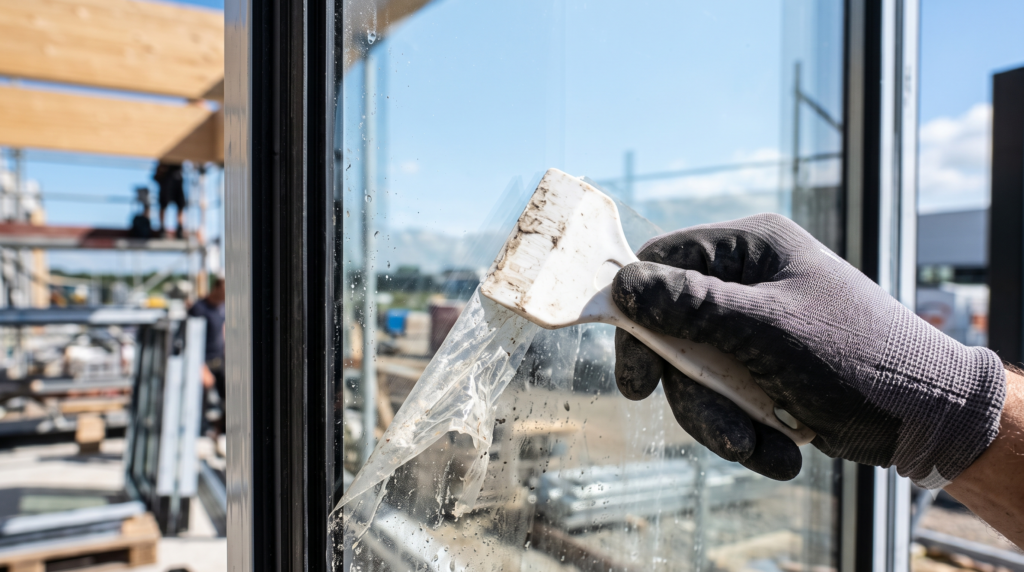
If dust is relentless, adhesive residue is infuriating. Window stickers, protective films, grout haze, hardened caulk and paint overspray all come off eventually — the skill is getting them off without damaging what’s underneath.
Where it comes from
Every phase leaves something behind: glues and sealants from flooring and cabinetry, protective plastic film on glass and stainless steel, overspray from paint and sealers, and grout haze from tiling. These products are engineered to stick permanently, which is exactly the problem.
The mistakes that cause damage
- Scraping hard with metal tools, which scratches glass and steel
- Reaching for harsh solvents that stain or dull the surface
- Applying too much heat and warping the material
What works
- Identify the residue first — paint, silicone and adhesive all behave differently.
- Test in a hidden spot before you commit. Citrus-based cleaners handle most adhesives well.
- Plastic scrapers before metal, always. Metal is a last resort on hard surfaces only.
- Soften thick glue with steam or gentle heat rather than force.
- Finish with microfibre and a pH-neutral cleaner.
On high-end materials — marble, natural stone, raw timber, aluminium, tinted glass — match the product to the surface and test first. Specialty adhesive removers work, but several can discolour a finish permanently. A little warm vinegar and dish soap is a safer first attempt on glass.
3. Cement, grout and construction waste
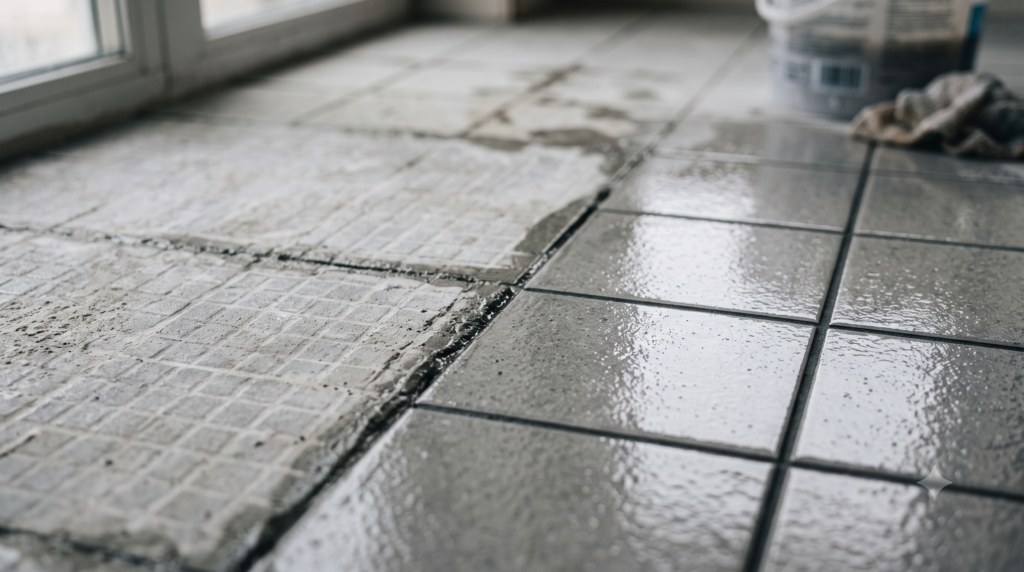
This is the heavy-duty end, where tools, chemistry and patience meet. Cement dust, dried grout and leftover mortar bond so tightly they can feel like part of the structure, and even small splatters will ruin the look of a new floor if they’re left too long. Loose debris — timber chips, nails, concrete fragments — will also destroy cleaning equipment given the chance.
What works
- Soften before scrubbing. Dried grout and concrete respond to specialised removers or diluted acid cleaners — test first, and wear full protective gear.
- Pressure-wash exteriors on low only. High pressure damages new surfaces.
- Vacuum before sweeping. Counterintuitive, but it stops grit dragging across and scratching floors.
- Dispose properly under your state EPA and local council construction and demolition waste rules.
For concrete splatter on glass, a razor scraper held at a 45-degree angle is the only safe mechanical method — with a steady hand and a fresh blade every time. And one absolute rule: never mix cleaning chemicals on site. Ammonia and bleach together release toxic gas.
The five mistakes that make all three worse
- Cleaning too soon. Dust keeps settling for days after sanding or drilling. Rush it and you’ll do it twice.
- Using the wrong chemicals. Harsh products damage stainless steel, stone and new flooring.
- Ignoring hidden areas. Vents, skirting boards and the space behind appliances hold dust that spreads later.
- Forgetting fixtures. Light fittings, switches and door frames need detailing before handover.
- Skipping the final check. A walkthrough with the builder catches what got missed — or re-dirtied.
Structured checklists are what separate “looks clean” from genuinely move-in ready. Ours is here: the room-by-room builders clean checklist.
How builders can make all three easier
Most of the difficulty is set before the cleaners arrive. Clear the major debris — nails, timber scraps, packaging — while the trades are still on site. Make sure power and water are connected. Book the clean only once the last trade is finished, not around them. Flag delicate surfaces that need special products. And leave the air conditioning off until the final clean is done, or vent dust will recoat everything.
Getting that sequence right is the single biggest lever you control — our guide to the handover cleaning schedule sets out when each stage should happen.
Frequently Asked Questions
Fine dust, adhesive and paint residue, and dried cement or grout. Each needs a different method — dust needs HEPA capture rather than sweeping, adhesive needs the right solvent and a plastic scraper, and cement must be softened before it’s touched.
Because the finest particles stay airborne for days and resettle after you clean. Sweeping and household vacuums make it worse by pushing them back into the air. It takes HEPA capture, air scrubbing and several passes over two to three days.
Identify the residue first, test a solvent in a hidden spot, use a plastic scraper before metal, soften thick glue with steam or gentle heat, then finish with microfibre and a pH-neutral cleaner.
Soften it first with a specialised remover or diluted acid cleaner, testing in a hidden area and wearing full protective gear. Scrubbing dried cement dry will usually take the surface finish with it.
No. Construction dust contains respirable crystalline silica, and domestic vacuums push the finest particles back into the air through the exhaust. An H-class HEPA vacuum is essential.
Let us handle the hard part
Post-construction cleaning isn’t about appearance — it’s about turning a site over in a state that reflects the build. Spruces handles builders cleans and final cleans Australia-wide, from the Gold Coast and Brisbane to Sydney and Melbourne.
Send your floor plans, a few site photos and your handover date to final@spruces.co, or call 1300 940 202, and we’ll come back with a fixed, itemised price.