Quick answer
Post-construction cleaning delays are almost never the cleaner’s fault. The root cause is poorly executed handoffs between trades — the single biggest source of construction delays in a study of over 321,000 scheduled tasks. By the end of a project the schedule float is gone, so every earlier slip lands on the final clean. Fix it by putting the clean in the master schedule as three staged visits, and booking it only once the last trade is off site.
The Final Hurdle That Trips Up Almost Every Project
You know the scene. The plasterboard is up, the paint is drying, and the finish line is close enough to taste. Handover is just around the corner.
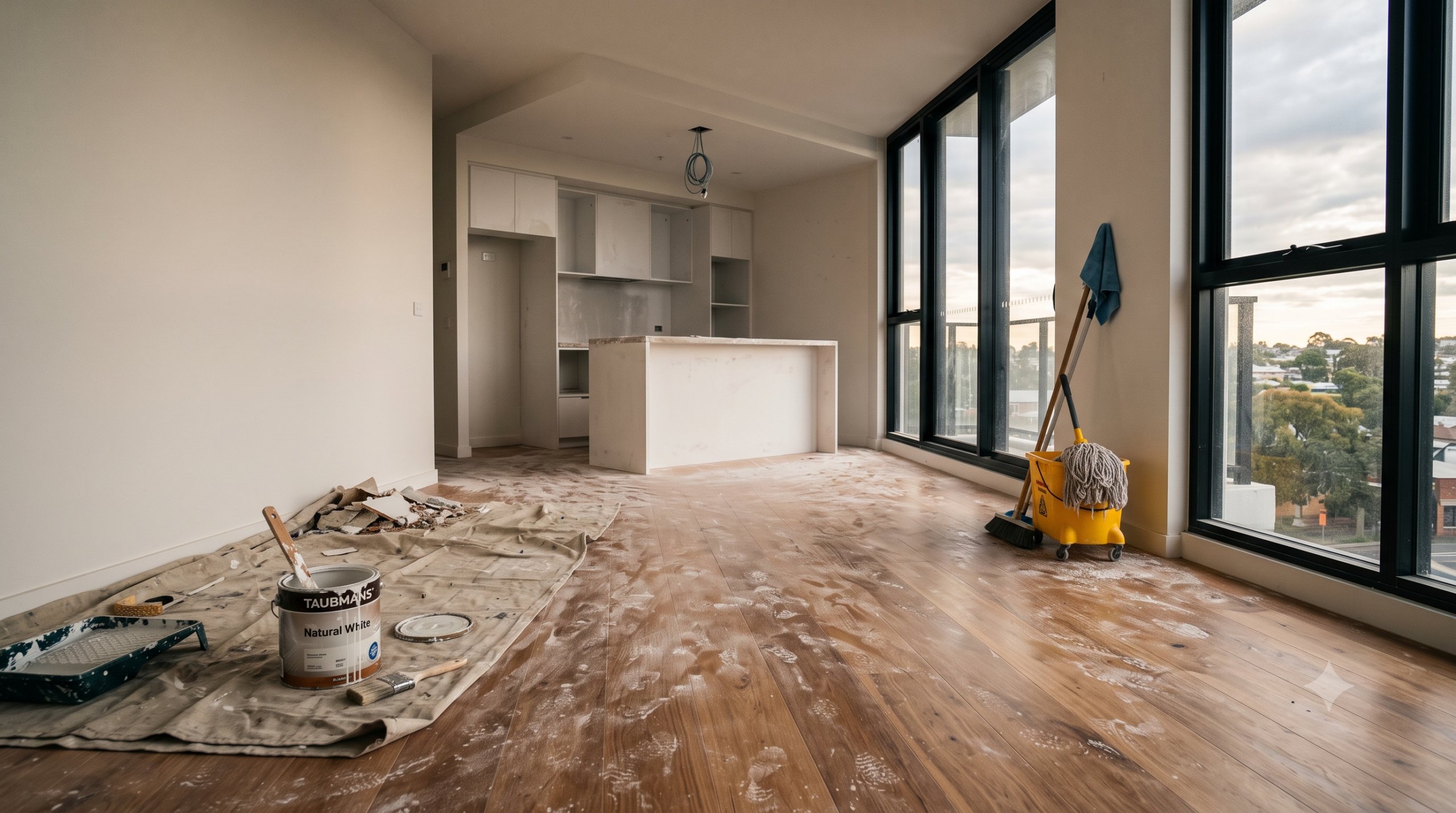
But that final 10% of the project feels like it’s about to eat 90% of your remaining time, budget and sanity. The site is a mess of fine dust, stray debris and the ghosts of a dozen trades who have come and gone. This is where the most underestimated bottleneck rears its head: the final clean.
Post construction cleaning delays are incredibly common, and they trigger expensive penalties, blow out budgets, and sour a good client relationship right at the end. Most people blame the cleaning crew — too slow, understaffed, not up to it. Wrong.
The real reason is a systemic flaw in project management that starts long before a single cloth is unfolded. The chaos of the final clean is the symptom, not the cause. Here’s the root cause, and the playbook to fix it.
The Warning Signs of a Final Clean in Trouble
When a final clean goes wrong it isn’t just a bit of dust — it’s a logistical problem that actively stops you finishing. The signs you’re heading for a delay:
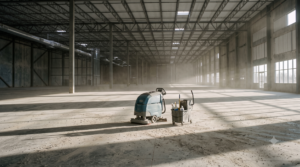
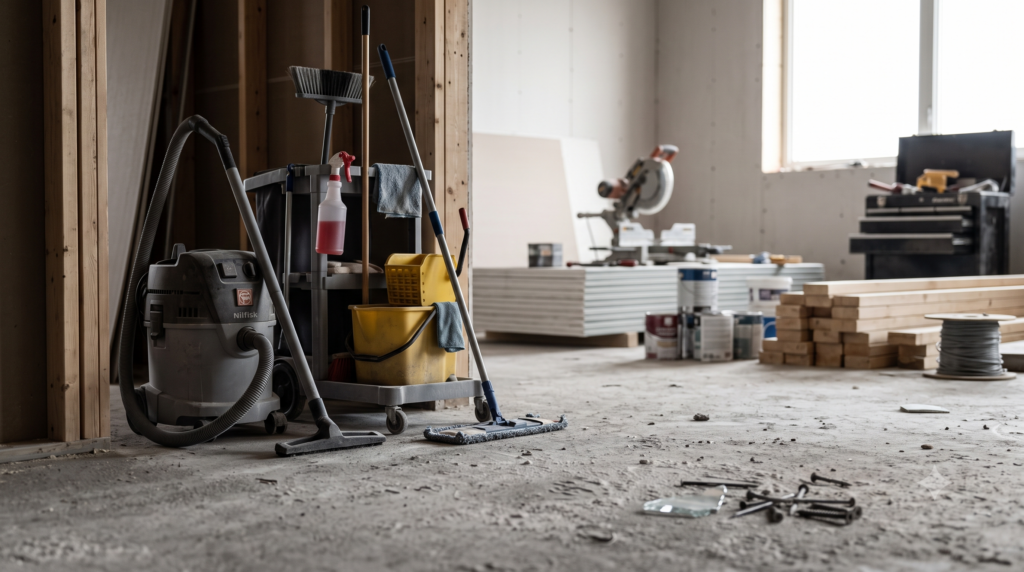
- The dust apocalypse: super-fine powder from plasterboard, timber and concrete that gets everywhere — walls, inside cabinets, deep in the air-conditioning. Without HEPA gear it’s more than an eyesore; it’s a respiratory hazard that can fail an air-quality check and hold up your occupancy certificate.
- Stubborn stains and residues: paint splatter on new glass, adhesive on expensive flooring, concrete slurry on polished fixtures. These need industrial products and specific technique. One wrong move turns a cleaning task into a replacement order.
- A minefield of hazards: nails, screws and glass shards across the floor. A crew can’t work quickly or safely navigating that, and it’s a site-management failure, not an inconvenience.
- The coordination nightmare: cleaners dodging painters doing touch-ups, electricians fitting fixtures, plumbers chasing a leak. Areas are inaccessible, finished rooms get re-contaminated, and the same work gets done twice.
None of these are the cause of the delay. They’re the symptoms of something baked into the schedule much earlier.

The Real Culprit: The #1 Reason Your Timeline Slips
The frustration is real, but it’s aimed at the wrong people. The cleaning crew isn’t the problem — they’re the last in line to inherit it.
A report from Touchplan, a construction production-planning platform, analysed over 321,000 scheduled construction tasks and found the single biggest cause of delays is poorly executed handoffs between trades, with more than 168,000 reported issues (Construction Dive).
That’s it. The cleaning delay isn’t a separate issue — it’s the predictable result of a project that has been bleeding time from the start.
A “poor handoff” isn’t a buzzword. It’s the electrician showing up to an unpainted room. The flooring installer scuffing a finished wall, forcing the painter back. The plumber’s late fixture install holding up three other trades. These lead to congestion and rework — everyone tripping over each other, undoing finished work, grinding productivity to a halt.
Early in a project you have “float” — buffer time that absorbs those small hits. By the end, the float is gone. A one-day delay from the flooring team doesn’t push the schedule back one day; it stops the painters, the cabinet installers, the electricians — and the cleaners. The cleaning delay is simply the culmination of every poor handoff that came before it.
Other factors make it worse: labour shortages leaving subcontractors stretched thin, supply chain delays stopping work unexpectedly, communication breakdowns causing the wrong materials to be installed, and scope creep from late change orders. But it’s the handoffs that create the chaos that makes a timely final clean impossible.

The Domino Effect: How Poor Sequencing Creates a Cleaning Nightmare
1. Ongoing trade work blocks access
Other trades are still on site when the cleaners are scheduled to start. A professional crew can’t do a detailed final clean in an active work zone — they’re blocked from rooms and whole floors, waiting while their own schedule gets squeezed and labour costs mount.
2. The vicious cycle of rework and re-contamination
Bad handoffs mean damaged work, which means rework — and rework generates new dust after cleaning has already started. The cleaners make a room spotless, a painter comes in for a touch-up, and everything is coated again. Start over.
3. The cleaning plan is destroyed
Professional post-construction cleaning is systematic: rough clean, detail clean, final polish, executed top-to-bottom and back-to-front to avoid re-contamination. When trades move randomly through the site that plan collapses, and the crew is forced into reactive spot-cleaning — slower, and a worse result.
4. Compromised safety and degraded quality
An active site is more dangerous than a vacant one — more people, tools and cords mean more slips and trips. Constant foot traffic also means new smudges and footprints on surfaces just perfected, dragging out the process.
5. The hidden dust problem
Here’s the classic, costly mistake: turning on the air conditioning before the final clean is done. The system pulls hidden dust out of the vents and blows it across the entire building, coating every surface in grit. That one sequencing error can force a complete re-clean — completely preventable, and a perfect illustration of how uncoordinated trades turn into a crisis.
More Than a Missed Deadline: The Real Cost
The financial bleed
- Liquidated damages: most contracts carry a daily penalty for every day you’re late. They’re designed to compensate the owner for lost revenue, and on a large contract they eat into margin within days.
- Burn rate: every extra day still costs you site supervision, equipment hire, utilities and insurance. It adds up quietly and relentlessly.
The reputation hit
The construction world is small, and a name for running late is hard to shake. It makes future bids harder to win.
And remember what the final clean actually is: the last impression you leave. Walking through their new building, your client doesn’t see the perfect foundation. They see dust on the benchtops, a paint smudge on a light switch, debris in the window tracks. A dirty handover reads as carelessness even when the build quality is excellent — and it leads to a long punch list right when you need to collect final payment.

Your Action Plan for an On-Time Handover
Preventing post construction cleaning delays starts at the beginning of a project, not the end. Four strategies.
1. Put cleaning in the master schedule
Stop treating the final clean as an afterthought. Schedule it like any other subcontractor, with start dates, durations and dependencies.
Pro tip: start the detailed final clean one to three days before handover. That buffer lets the crew work without rushing and leaves you time for a walkthrough. Our guide to the building handover cleaning schedule sets out the timing for each stage.
2. Use a phased approach
A single monolithic “final clean” is inefficient. Three phases tied to the construction timeline works far better:
- Rough clean — after major structural work. Removes large debris and heavy dust, making the site safer for finishing trades.
- Detail clean — the main event, after all construction including touch-ups is complete. Top-to-bottom, every surface.
- Final polish — right before the walkthrough. Settled dust and fingerprints removed, space move-in ready.
If you’re not sure which of these your project actually needs, builders clean vs final clean vs bond clean spells out the difference.
3. Master your inter-trade communication
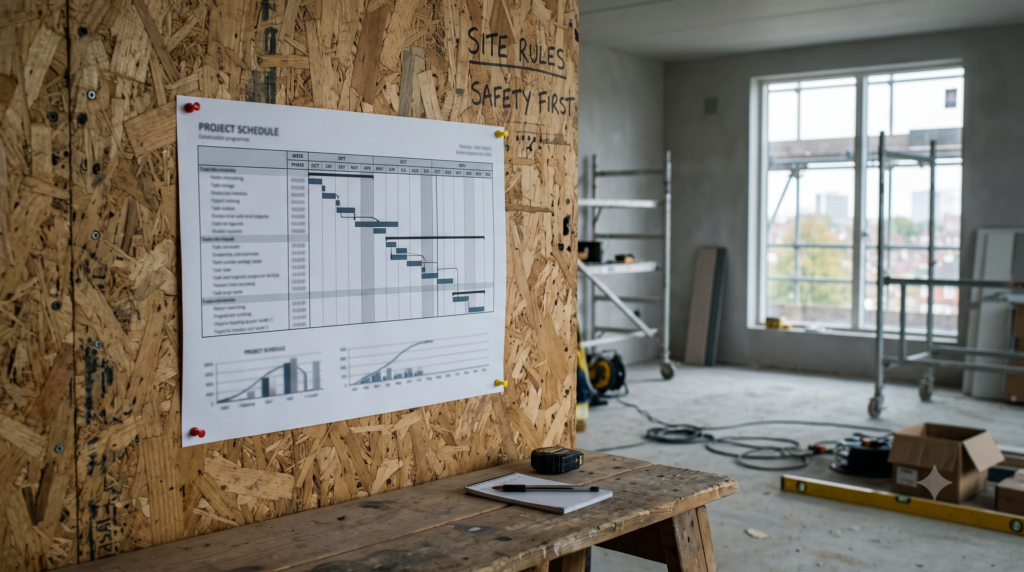
Since bad handoffs are the root cause, communication is the cure. Use project management software with Gantt charts or Kanban boards so every sub can see how their work affects the next trade. And hold a 15-minute stand-up each morning with the site superintendent and trade foremen to align on the day and resolve conflicts before they become delays.
4. Vet your cleaning partner properly
Not all cleaning companies are equal, and using your regular janitorial staff or a cheap general cleaner is a classic mistake. A true post-construction specialist works to a defined process, which is what makes them fast and predictable enough to hit a tight handover date.
Look for a partner with:
- Proven experience on post-construction projects, not general commercial cleaning
- Full liability insurance appropriate to construction sites
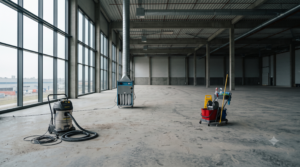
- Specialised equipment — H-class HEPA vacuums and air scrubbers, not mops and buckets
- Safety training in construction site protocols
- Their own QA system — checklists and supervisors, so quality is controlled before you have to inspect it
- Attention to the details that show — protective film and stickers off appliances, window tracks and joinery free of dust
- Compliant waste disposal in line with local regulations, so you’re not exposed to fines
On-site work should align with the standards set by bodies like Safe Work Australia and Master Builders Australia. Choosing a partner isn’t about the lowest price — it’s about finishing on time and to standard.
| Area of focus | Reactive mistake (the path to delays) | Proactive solution (the path to an on-time handover) |
|---|---|---|
| Scheduling | Schedules the clean last-minute as an afterthought. | Integrates cleaning into the master schedule with clear dependencies. |
| Crew selection | Uses in-house janitorial staff or a general cleaning service. | Hires a specialised post-construction cleaning crew with proven experience. |
| Equipment | Relies on standard commercial vacuums and basic supplies. | Mandates industrial-grade HEPA vacuums and specialised cleaners. |
| Quality control | The project manager inspects and writes a punch list for the cleaners. | The cleaning partner runs their own QA system with checklists and supervision. |
| Waste disposal | Leaves unsorted construction waste, risking fines and cost overruns. | Partners with a company that follows local waste regulations. |
| Communication | Assumes the site will be ready; little coordination with other trades. | Holds daily site meetings to coordinate handoffs and clear the site for cleaners. |
Frequently Asked Questions
Poorly executed handoffs between trades. In a study of over 321,000 scheduled construction tasks, handoffs were the single biggest cause of delays. By the end of a project the schedule float is gone, so every earlier slip lands on the final clean.
Rarely. They’re last in line, so they inherit the accumulated delay. The usual causes are trades still on site, rework generating fresh dust, and the clean being booked before the site is actually clear.
One to three days before, once every trade is off site. That buffer lets the crew work without rushing and leaves time for a walkthrough and any adjustments.
Turning on the air conditioning before the final clean. The system pulls hidden dust out of the vents and coats the whole building, which can force a complete re-clean.
Put it in the master schedule with real dates, use three staged cleans rather than one, run daily coordination with the trades, and engage a specialist rather than a general cleaner.
Turn Your Final Clean from a Liability into an Asset
Post-construction cleaning delays are not the cleaner’s fault. They’re the final symptom of poor handoffs between trades that plague a project from the start. The fix is proactive project management: put cleaning in the master schedule, use a phased approach, run your inter-trade communication properly, and partner with a specialist.
The final clean isn’t a cost to minimise. A flawless, on-time handover secures client satisfaction, prompt final payment, and the reputation you need to win the next job.
Send your floor plans, a few site photos and your handover date to final@spruces.co, or call 1300 940 202, and we’ll come back with a staged schedule and a fixed price.