Quick answer
A handover clean should be scheduled in three stages, not squeezed into one day. The rough clean goes in after the major trades finish but before fittings and painting. The final clean is best booked one to two days before handover, once every trade is off site. The touch-up clean happens right before the client walkthrough, after any defect or punch-list work. Leaving it all to handover morning is the single most common cause of a rushed, patchy finish.
Why Scheduling Matters in Building Handover Cleaning
A handover clean is not just another task at the end of construction — it’s the final presentation that defines your client’s first impression. After months of work, that moment has to go smoothly. Yet many projects still hit delays because the cleaning was scheduled too late or crammed into a single day.
Treating cleaning as an afterthought leads to recontamination, safety issues and costly delays. When it’s built into the construction timeline as three distinct phases, sites stay compliant, safe and presentable. Bringing your cleaners in early to plan those phases is what keeps the whole thing on schedule.
The Handover Cleaning Timeline at a Glance
| Stage | When to schedule it | What it achieves |
|---|---|---|
| Rough clean | After major trades and plastering, before fittings and painting | Clears bulk debris and heavy dust; makes the site safe for finishing trades |
| Final clean | One to two days before handover, once all trades are off site | Detailed polish of every surface, glass and fixture — inspection ready |
| Touch-up clean | After defect and punch-list work, immediately before the walkthrough | Removes new dust, marks and fingerprints so the finish holds |
Protecting Health and Safety During Handover
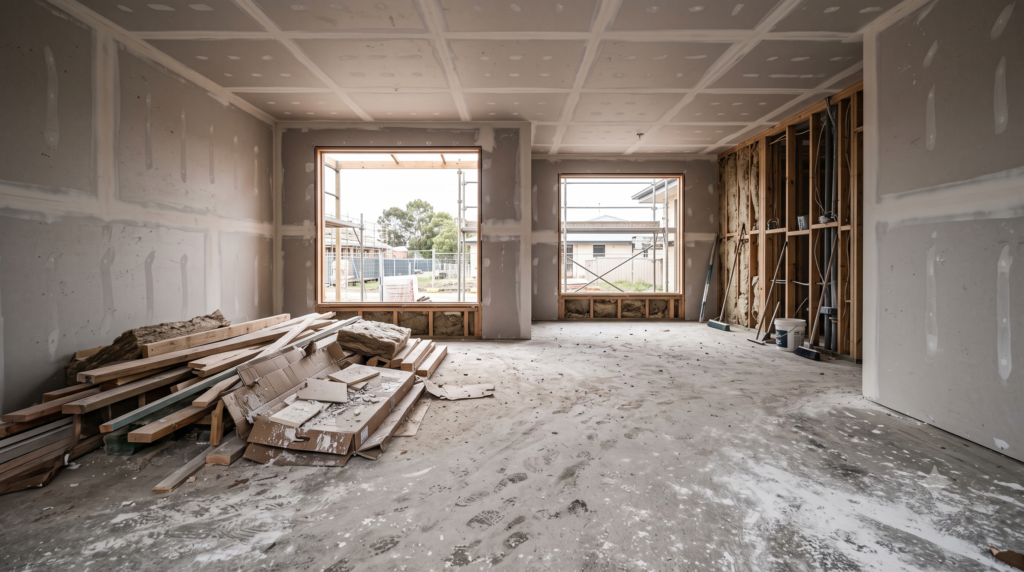
Scheduling isn’t only about convenience — it’s risk management. Fine dust, especially respirable crystalline silica, lingers in the air long after the other trades leave. If cleaning only happens on handover day, that dust settles onto finished surfaces or gets inhaled by whoever is on site.
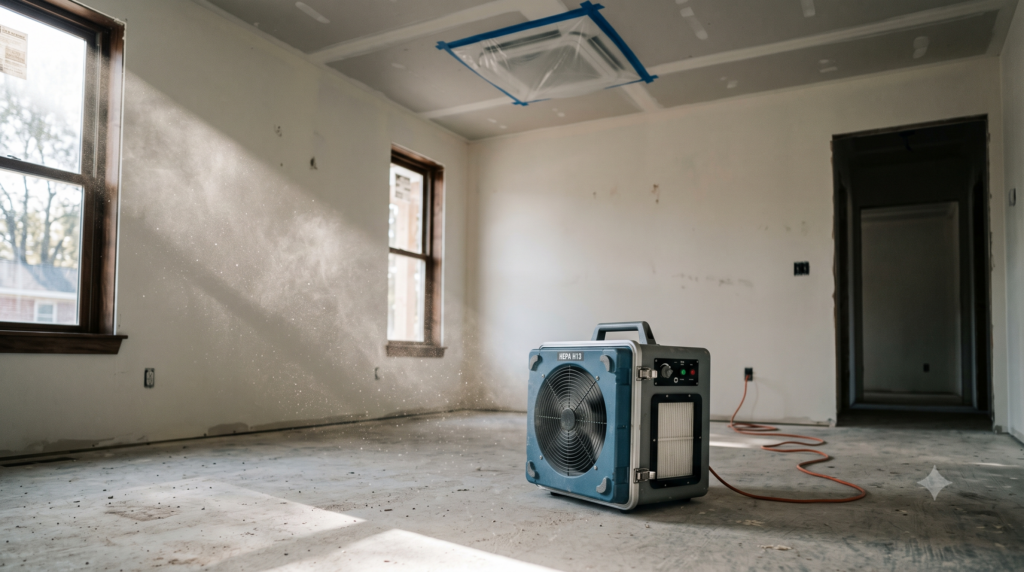
Following Safe Work Australia’s guidance on crystalline silica means integrating cleaning throughout the project rather than bolting it on at the end. Professional crews seal vents, use HEPA-filtered vacuums and run air scrubbers before the air conditioning is ever switched on — which stops contaminants spreading through the building and makes for a healthier space for everyone who follows.
Coordinating With the Other Trades
On a busy site, painters, electricians and joiners routinely overlap with cleaners. Without coordination, a crew arrives to wet paint, uncured sealant or entire floors they can’t access — and the work gets done twice. A clear schedule prevents all of it.
What works in practice:
- Introduce the cleaners early. Cover the cleaning phases in pre-construction meetings so every trade knows when they’re happening and can plan around them.
- Lock the stages into the master schedule with real dates and dependencies, exactly like any other subcontractor.
- Define the scope of each stage in writing — what’s included in the rough, final and touch-up clean — so there’s no argument later.
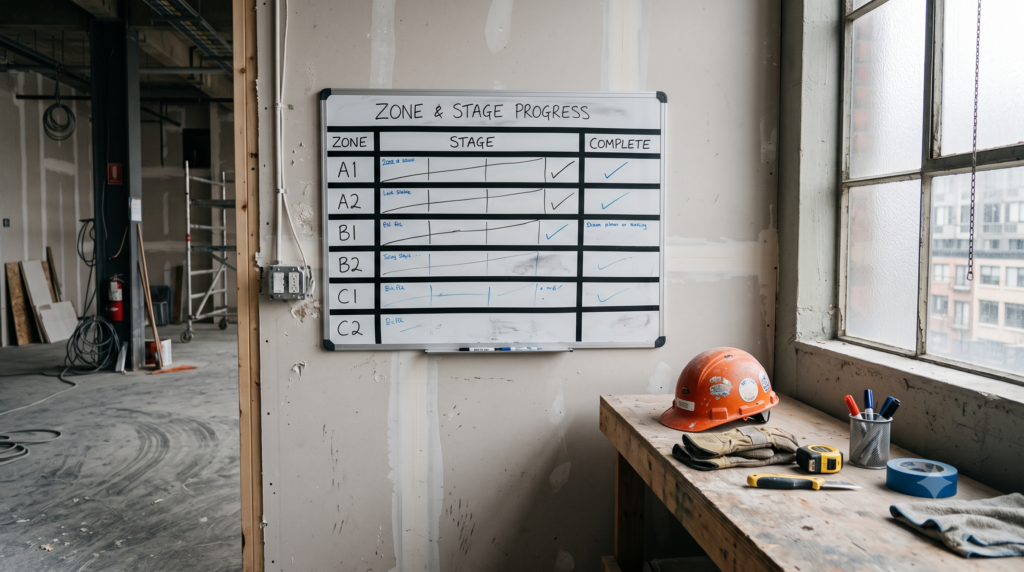
- Keep the schedule live. If tiling slips or painting runs over, the cleaners need to know that day, not on arrival. Shared calendars and project management apps make this trivial.
- Confirm zone access daily so crews work where they actually can.
Cleaners can also advise other trades on surface protection and dust control, while the trades keep the site tidy as they go. That two-way respect makes for a safer workplace and a noticeably better finish. Poorly managed handoffs between trades are the root cause of most late handovers — we go deeper on that in the #1 reason post-construction cleans get delayed.
Setting Up a Precise Cleaning Timeline
The rough clean
This phase begins after the major trades finish but before painting. Cleaners remove debris, sweep floors and vacuum plaster dust using HEPA filtration. It reduces health risks, stops dust embedding into new finishes, and gives the finishing trades a safer, more efficient site to work in.
The final clean
The final clean prepares the site for inspection. Every surface — ceilings, fixtures, glass, tiles, tracks and joinery — is detailed until it’s flawless. Air scrubbers and HEPA vacuums capture the last of the airborne dust before the client arrives. This is the stage worth protecting in the schedule, because it’s the version of the building your client actually sees.
The touch-up clean
Even after the final clean, last-minute adjustments — a door refit, a paint touch-up — create fresh mess. The touch-up clean, done just before handover, clears any new debris, marks and fingerprints so the whole project presents consistently.
For the room-by-room detail of what each stage covers, use our builders clean checklist. If you’re unsure which stages your project actually needs, start with builders clean vs final clean vs bond clean.
Client Impressions Depend on Proper Planning
A rushed clean a few hours before handover leaves streaks, dust and residue, and even small flaws reflect on the build. Schedule time for inspection and adjustment and the crew can polish glass, buff floors and remove protective films without working against the clock.
Documenting the result with photos and a completed checklist builds trust too. When a client walks into a spotless site, they attribute that quality to your brand. Scheduling properly isn’t a luxury — it’s an investment in how the whole project is judged.
Tools, Techniques and Documentation
A proper handover clean depends on professional-grade equipment. HEPA vacuums capture 99.97% of particles as small as 0.3 microns, and air scrubbers with carbon filters improve air quality across the site. Microfibre cloths lift fine particles without scratching, and pH-neutral products protect delicate materials like stone and stainless steel.
Proven technique
Crews work top-down — ceilings first, then walls, windows, and floors last — to avoid cross-contamination. They seal air-conditioning vents while cleaning, use colour-coded cloths to prevent cross-use, and remove debris rather than sweeping it aside.
Documentation that protects everyone
A structured checklist tracks every room and surface, with defects noted and photographed as the crew goes. Sharing that record with the builder makes the job auditable instead of a matter of memory, and it protects both sides if something is queried at walkthrough. Reviewing recurring issues — dust in vents, say — is what turns one good clean into a consistent standard.
Frequently Asked Questions
In three stages: the rough clean after major trades finish but before fittings and painting, the final clean one to two days before handover once all trades are off site, and a touch-up clean immediately before the client walkthrough.
Ideally one to two days before, not on the morning of. That buffer lets the crew work without rushing and leaves time for a walkthrough and any adjustments.
On small jobs, sometimes. On most projects, compressing everything into one day is what causes streaks, missed spots and defect-list items, because dust keeps settling and late trade work re-contaminates finished rooms.
Rough clean (clears bulk debris and heavy dust), final clean (detailed polish of every surface, glass and fixture), and touch-up clean (removes new marks and dust created by defect work before the walkthrough).
The site manager or project manager, with the cleaning company brought in early. Cleaning should sit in the master schedule with real dates and dependencies, like any other subcontractor.
Plan Your Handover Clean Properly
Building handover cleaning is the bridge between construction and occupancy. Scheduled correctly, and backed by coordination and documentation, it keeps the project on track and the client satisfied.
Spruces runs rough, final and touch-up cleans Australia-wide — from the Gold Coast and Brisbane to Sydney and Melbourne. Send your floor plans, a few site photos and your handover date to final@spruces.co, or call 1300 940 202, and we’ll come back with a staged schedule and a fixed price.
For further guidance, see Safe Work Australia on crystalline silica and the National Construction Code.